MIAMI BEACH — More than ever, connecting with multicultural consumers through “inclusive marketing” is a must among CMOs seeking to build brand longevity while reflecting the reality of America today.
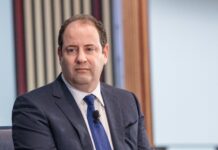
For Procter & Gamble Co. Chief Brand Officer Marc Pritchard, this means starting from within, and ensuring that the internal composition of a company matches the audience it seeks. Is radio and TV far behind on this effort?

Pritchard is well-known in marketing circles for his efforts to push diversity in the marketing messages tied to such P&G brands as Tide, in addition to Secret, Charmin, Puffs and Head & Shoulders.
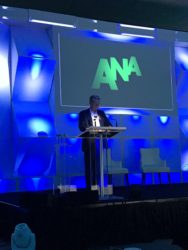
His Keynote Address to attendees of the 2018 ANA Multicultural Marketing & Diversity Conference presented by Pandora touched on the many ways Pritchard embodies the “new America.” He noted how he has only daughters, and how he was raised in a largely African American community in Arkansas. Pritchard also discussed how his birth father is of Mexican heritage, and how he had suppressed this while rising through the corporate ranks.
It’s a tale Prichard has shared before, but worth repeating — for multiple reasons.
On this day, Prichard’s audience was comprised of a who’s who of marketing and advertising professionals from the client side (Eli Lilly & Company and Phillip Morris parent Altria were among the many top brands present) to agency (Miami-based Zubi Advertising VP/Media Integration Isabella Sanchez).
Importantly, Urban One VP/Business Development Josh Osh was in attendance, as were some key Urban media leaders including Sherman Kizart and Chesley Maddox-Dorsey, of American Urban Radio Networks (AURN) and its parent, Access.1 Communications. No less than four iHeartMedia C-Suiters, were here, including SVP/Multicultural Strategy and Sales Peggy Byrd.
There was also Ellen Falb-Newmark, VP/Client Development of Telemundo Network Group, and several Univision executives.
The standing-room only crowd heard Pritchard deliver a message that explained his passion toward diversity and inclusion in marketing and advertising, and why that needs to flow from the top of the C-Suite. Because of his background, and because of flaws he saw in a Cover Girl campaign from 20 years ago, he acted to make a change.
It wasn’t easy, but led Pritchard to provide one pertinent bit of advice to all in attendance: Getting the conviction to get up and take a stand took several moments of truth. But, it was done. And, others can take the lead.
In many ways, radio and television have done so. But, some may argue that broadcast media still has a way to go to fully embrace the diverse audience it seeks — or could if it were to make the effort.
Speaking of his efforts in 1998 to relaunch a Cover Girl campaign with the tagline “easy breezy beautiful,” Pritchard recalled his attendance at a spiritual conference. There, he was told that he had the power to make a difference, as “business will be the greatest force for good in the future.”
Why? Because, he was told, brands touch people. In the case of the Cover Girl campaign, “thin white women” were the centerpiece. Pritchard thought about what was said to him, and then his own young daughters and the message he wanted them to see. The standards of what beauty really was led Cover Girl to work with Queen Latifah. This brought a diversity play to Cover Girl that led the brand to bring in pop stars Pink, Katy Perry and Janelle Monae, and actor/comedian Ellen DeGeneres.
It has been stated in RBR+TVBR that radio and TV brands are no different than the brands seen and heard across the TV commercials these media air.
If that is true, do radio and TV have an awareness of the multicultural consumer, but perhaps lack “sustained action”? It was just that which gave Pritchard a “huge wakeup call.” He indeed had a voice and vehicle for change. “I went through wave of disappointment, for letting people down,” he said. “Do I slink away or step up? I personally engaged in deep dialogue with trusted colleagues, who were willing to educate me and share their feelings and tell me what I was missing and most importantly, and tell me what I was missing so we could accurately move forward.”
The result? Pritchard said, “I was shocked at the bias that still existed. It was painful to hear the cumulative impact on dismissals, and conclusions. It was clear that we, and I, had to step up.”
At P&G, this included several noteworthy initiatives. One internal “step up” event was to more open celebrate Black History Month with all employees, not just African American staff. Externally, partnerships with BET and Essence were crafted. Externally, a now-famous social responsibility campaign from Tide invited Latinos to “wash away” racial insults imprinted on T-Shirts in an effort in which it partnered with the NCLR. “Labels are stains” was the tag line.
“This was a powerful ad that generated 8 million views in just one month, and effected me personally, as I am half-Mexican,” Pritchard said.
The point of Pritchard’s address, which reinforced the mantra that “inclusive marketing matters,” was that he opted to use whatever influence he had, for however long he had it, “to make the world a better place, and to use my position for the influence of good.”
What about alienating conservatives, Pritchard was asked by an attendee? “Just do it,” he said. “There may be people that don’t agree and you have to accept the fact that that’s OK. This is what this country is all about — difference of opinion.”
In a following session, Sam’s Club Chief Member Officer Tony Rogers offered a similar sentiment. “We are one of the critical growth drivers of any company, but we also have the ability to impact society,” he said of CMOs.
While the radio industry struggles with minority and women-owned ownership of stations and debate rages over the FCC’s diversity incubator — and if it is destined to fail, select companies have taken the baton for bringing diverse programming to the airwaves.
These companies are largely Univision Radio, SBS, Urban One, Lotus Communications, and Entravision.
Go beyond the multicultural-focused radio broadcasting companies and the question one may need to ask, “Does this company’s executive team, all the way down to the sales associate, reflect the diverse audience it seeks?”
It’s a tough question, and iHeartMedia stands out for LGBTQ and Hispanic efforts, in particular, seen in recent years.
But, are the majority publicly traded “total market” radio and TV companies as diverse as their listeners and, just as importantly, their advertisers?
“There are still areas for improvement,” said one attendee who resides in Richmond.
An African-American woman, this marketing professional listens to local radio in addition to SiriusXM and streaming audio. “I feel radio keeps me connected to the community,” she says. “It can be more personable to hear a local DJ tell me something that with satellite radio. But, if I wasn’t African American, I’d feel the same way about radio in the Richmond area — especially if I were Hispanic or Asian American.”
It’s food for thought. As CHR/Pop and CHR/Rhythmic seek to be representative of all of the hit music that’s popular with today’s audience, all it takes is a look at demographics on a national, regional and local scale to see that these format’s bread and butter is more multicultural than ever.
As such, does your morning show feature a variety of voices, and is it perhaps multi-ethnic and multi-gender?
If there’s a hole in your market to take on a Spanish-language format, would your company make the move, or would it opt out because it presently isn’t fully capable of serving this audience?
Now, let’s look at broadcast TV. ABC has done much championing Scandal and Black-ish, while taking the lead on programs of interest to Asian Americans and Hispanics. NBC’s breakout drama Manifest features a highly diverse cast, and the ratings among multiethnic viewers has been strong. But, what about local newscasts — are the anchors, and reporters, reflective of the audience it seeks?
With the most contentious midterm elections in U.S. history scheduled for Nov. 6, our nation could stay the course or create further disruption. What cannot be changed is the vast multicultural evolution taking place across the U.S.
This evolution must be reflected in the radio and TV stations serving American audiences. If not, they will fail to resonate with the consumer and risk losing market share — and perhaps a lot more in the years to come.
Diversity and inclusion is a hot topic among marketers and advertisers. If they’re looking to invest in media that reaches all consumers, wouldn’t it be prudent to learn about what Hispanic radio has to offer?
This is your chance to get ahead of your competitor. Please consider attending the 2019 Hispanic Radio Conference, March 12-13, in Miami.
For full details and to register, please visit www.hispanicradioconference.com