

WASHINGTON, D.C. — Roberts Broadcasting Co. co-owner Steven Roberts has had an interesting decade as a media owner. Exactly eight years ago, Roberts found itself in U.S. Bankruptcy Court, mired in debt the company blamed on the demise of the UPN network.
Today, Roberts controls one media property — a Class A Urban FM serving Jackson, Miss.
For Steven Roberts, where legacy media and new media are heading is the topic of focus today, as he served as the moderator of a MMTC Access to Opportunity Conference session devoted to monetizing the platforms of the future.
Roberts serves as a member of the MMTC board of directors, and offered a discussion on media entrepreneurship as part of a wide-ranging session that also addressed minority ownership of over-the-top (OTT) platforms.
In October 2011, Roberts’ situation was far worse than it is today. It had thousands of dollars in liabilities tied to MyNetwork TV affiliate WRBU-TV in St. Louis and three affiliates of The CW Network: WZRB-TV in Columbia, S.C.; WRBJ-TV in Jackson, Miss.; and WAZE-TV in Evansville, Ind.
The bankruptcy filings for the four stations followed litigation with program suppliers. In March 2011, CBS Studios and King World Productions won a $1 million judgment in a California court against the Roberts stations. Then, two weeks before the bankruptcy filing, Warner Brothers Television won a $1.4 million judgment, also in a California court. The cases involved syndicated programming fees.
By October 2012, Roberts opted to sell WRBJ to Trinity Broadcasting Network (TBN); the deal was approved by the bankruptcy court in January 2013. Then, in December 2013, Roberts settled its bankruptcy claims by selling WRBU, WZRB and WAZE for $7.75 to ION Media Networks.
With that behind him, the challenges multicultural content programmers and broadcasters
face in connecting with their audiences is a focal point for Roberts and a group of panelists including Beasley Media Group EVP/Programming Justin Case, HBCU Go founder/CEO Curtis Symonds, Condista Networks partner and Kids Central co-owner Augusto Valdez, and NABOB President Jim Winston, among others.
How new platforms and phenomena such as “skinny bundles,” cord-cutting, and over-the-top video have significantly changed the way content creators and distributors connect to consumers was addressed.
So was whether the movement to give consumers more choice and access to programming on demand is helping or hindering progress for people of color; and how media entrepreneurs can take their businesses from ideation to realization by sharing how they grew their current offerings into successful online media businesses.
Perhaps most noteworthy was a “special presentation” from Kelvin Boston, Executive Producer and Host of Moneywise with Kelvin Boston, a public television series.
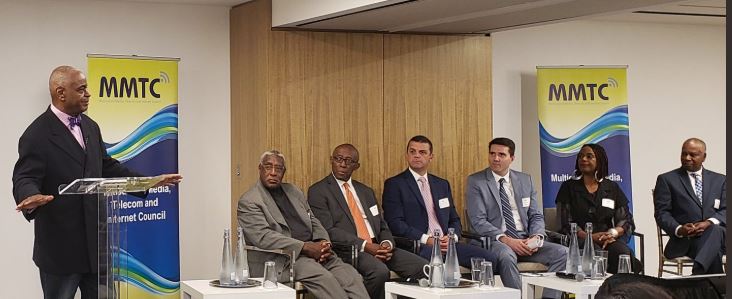
Boston discussed digital disruption, and how multicultural broadcasters can have more opportunity by increasing diversity in the OTT realm.
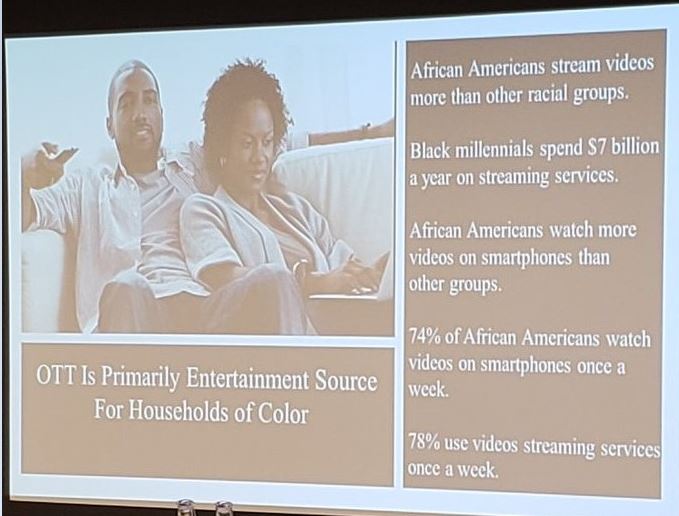
Boston noted that OTT is a $47 billion business, with 820 million connected devices in the U.S. It’s No. 2 in video watching reach, while a whopping 6 in 10 adults aged 18-29 only watch OTT video.
Who’s driving this growth? People of color, Boston says.
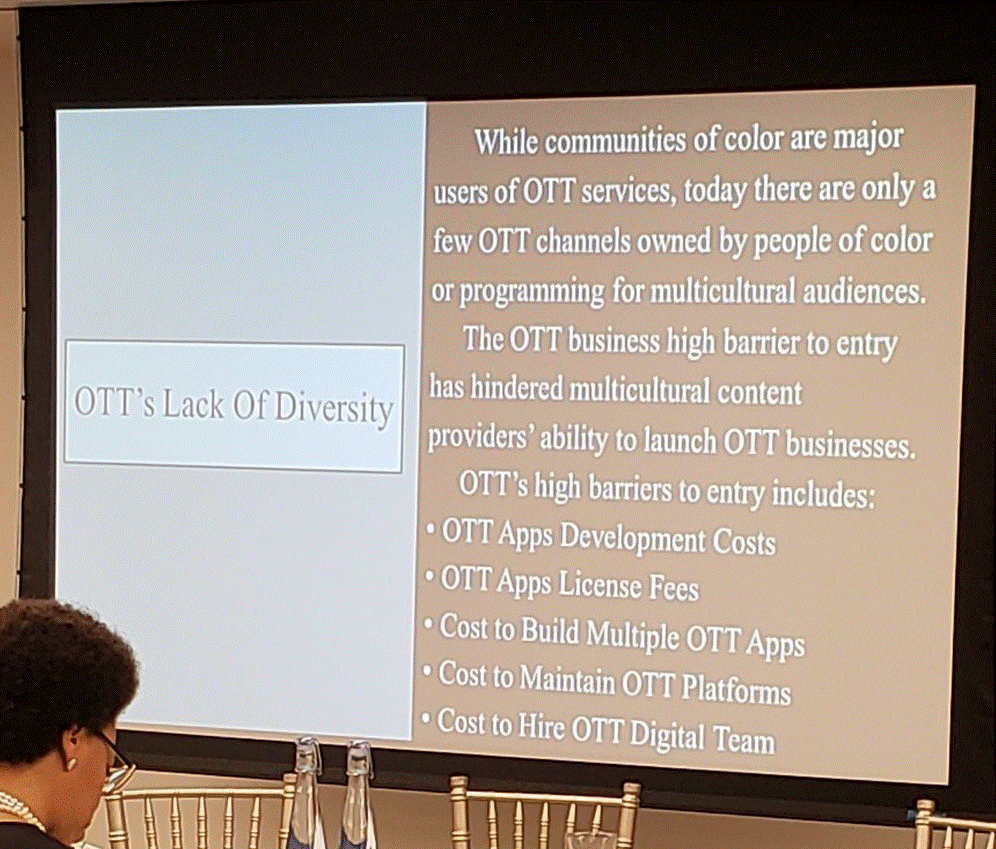
But, at the same time, OTT lacks diversity, Boston says.
The session also included a discussion on the BingeNow video platform services from George Simmons. The platform is described as a “Black Interactive Next Generation Experience.” Its core mission is to serve as a social networking and video sharing website focused on urban African Americans.